 Contact
 Search
 Register
 Cart
Cart

The Men Lost on S.S. Tuscania
The S.S. Tuscania was torpedoed on February 5, 1918, near Scotland, by a German submarine while transporting over 2,000 American troops to France for duty with the American Expeditionary Forces. The troops on board were members of units that represented the three components of the United States Army in 1917: the Regular Army, National Guard, and National Army. The loss of the S.S. Tuscania highlighted the persistent threat from German U-boats to American forces crossing the Atlantic on troop transports during World War I.
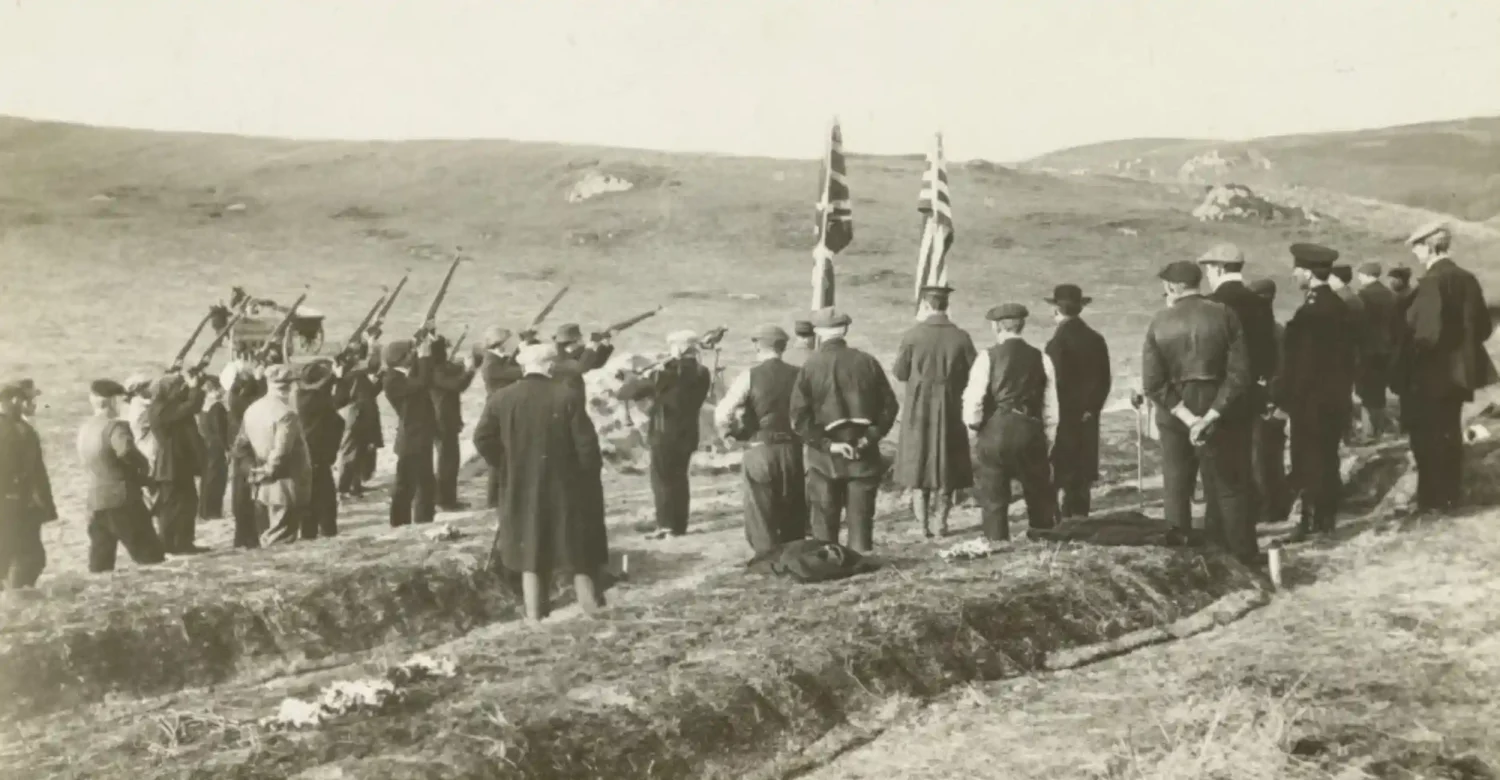
One of several funerals for the dead from the Tuscania in February 1918, in Scotland
The Men Lost on S.S. Tuscania was written to honor and remember those who made the supreme sacrifice for our great nation. Each unit that suffered casualties is described in terms of its organization, training, mission, and personal accounts to provide a better understanding of the military service of those who perished. Two hundred and thirteen men – five officers and 208 enlisted – did not survive, most of them were the first from their hometown killed by enemy action during World War I. To honor these men, a brief biography – including basic biographical information, an overview of military service, and burial details – for each man lost is provided at the end of the book.
Among those lost were Private Stanley Roy Augspurger originally from Ohio. The Augspurger Mountain in Skamania County, Washington was named in his honor. Private Marcus Barrett Cook from Ravalli County, Montana. Named in his honor Marcus Cook Peak on Cedar Mountain near Avery, Shoshone County, Idaho. Private William Wyley Wright from McCurtain County, Oklahoma. The town of Bismarck was renamed Wright City, Oklahoma in his honor.
Several had Veterans of Foreign Wars and American Legion posts named after them. Captain Philip Kilburn Lighthall was from Syracuse, Onondaga County, New York. Named in his honor the original Philip Lighthall Post, American Legion, in Syracuse, New York. Private Raymond Charles Butler was from New Richmond, St. Croix County, Wisconsin. Named in his honor the original Raymond Butler Post No. 80, American Legion, New Richmond, Wisconsin.
The American Monument on the Mull of Oa Peninsula of Islay, Scotland commemorates the lives lost on the troop ships S.S. Tuscania on February 5, 1918, and the S.S. Otranto on October 6, 1918. It was built by the American Red Cross and dedicated in 1920.
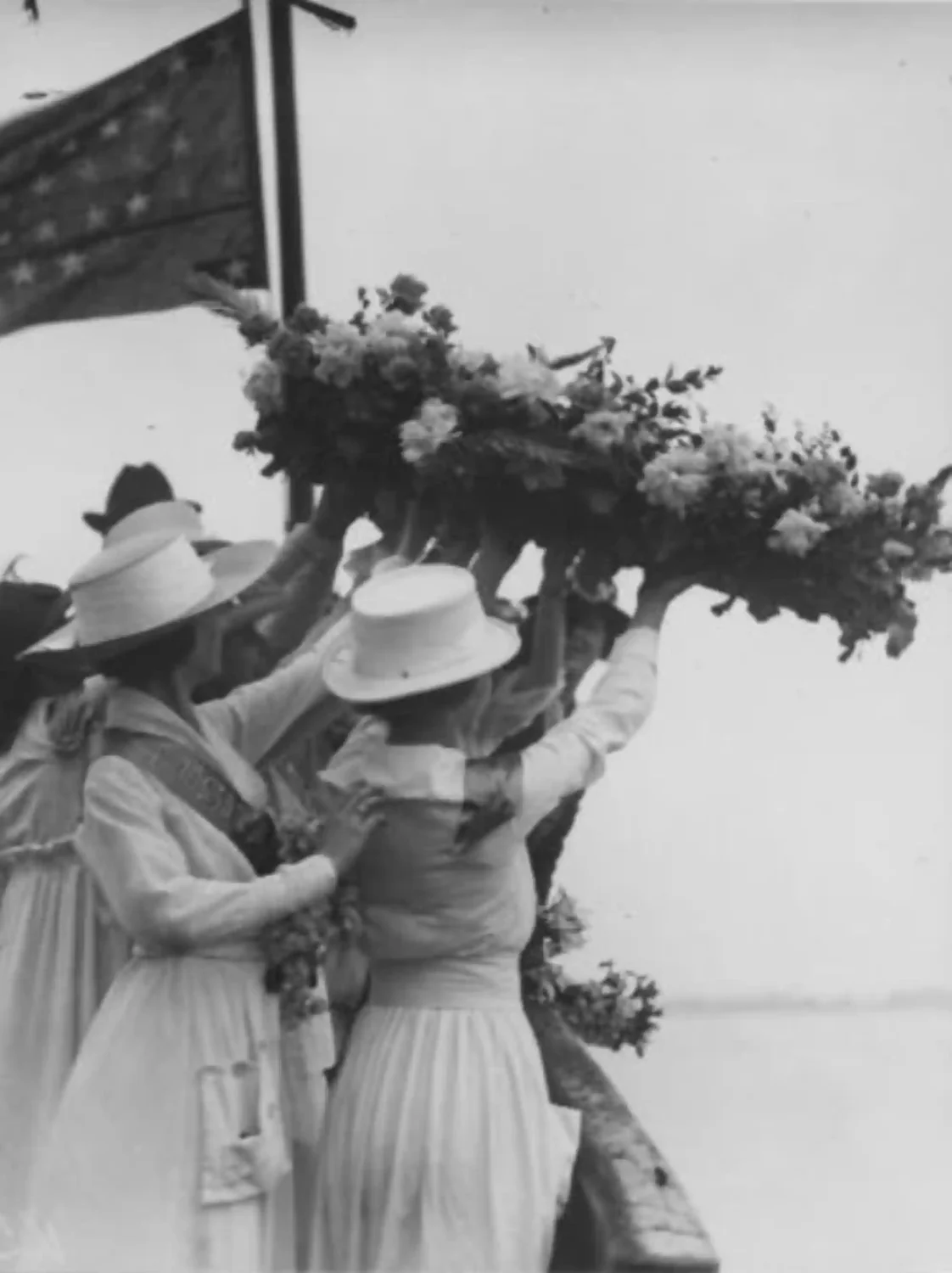
Memorial Day 1918: Honoring the Lost of the Lusitania and Tuscania
On Memorial Day in 1918, members of the Daughters of the American Revolution and the Legion of Loyal Women gathered along the Potomac River to honor victims of two wartime maritime tragedies: the Lusitania, sunk by a German U-boat in 1915, and the troopship Tuscania, torpedoed in 1918 while carrying American soldiers to Europe.
Dressed in light summer attire and patriotic sashes, the women lifted a wreath of flowers and released it onto the river as a symbolic act of national mourning and remembrance during World War I.
 Mail Us
 Email Us